Knowledge vs Execution — The Cycle of Getting Better
One of the most common misunderstandings about improvement in strategy games is the belief that knowledge alone makes you better. In reality, improvement is a process: you acquire knowledge and combine it with your existing skill in execution. When done correctly your level increases.
Yesterday I ran a session with two students that illustrated this perfectly.
One player was around 1700 ELO playing Japan, while the other was around 1400 ELO playing Macedonians. On paper the skill difference was clear, and the Japan player leveraged that by throwing four different strategies at his opponent across several games. He had significantly more Knowledge through experience with Japan to do so.
In doing so, the variety of strategies didn’t play a significant role.
the Macedonian player made the same core mistakes every game.
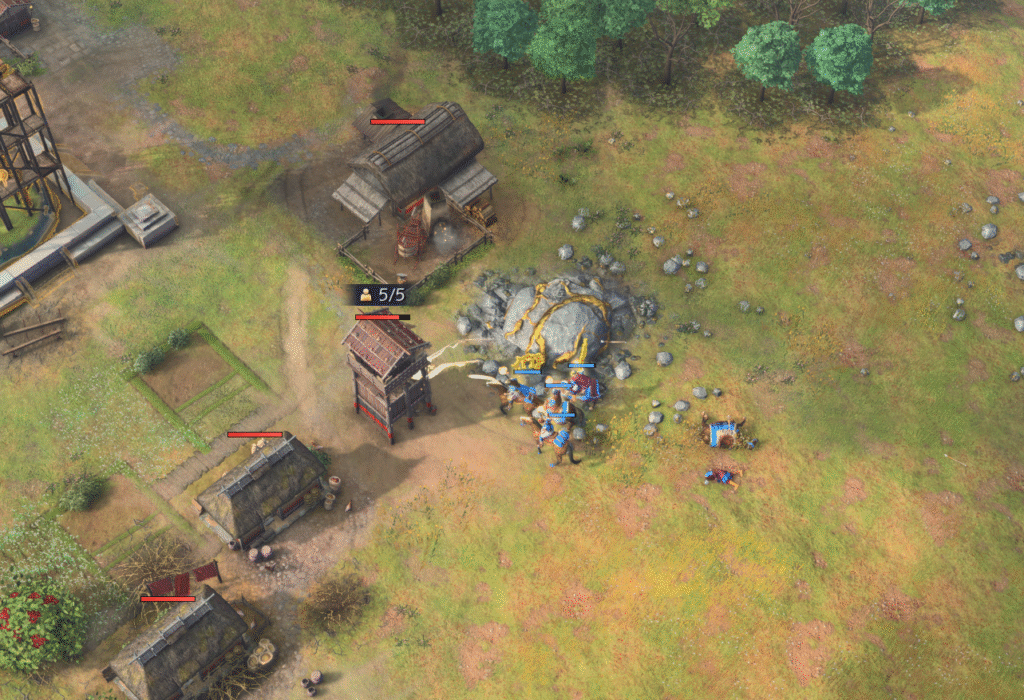
He believed he needed to contest gold early, even when the situation didn’t require it.
He attempted to torch a fortified tower with four horsemen and some archers, taking unnecessary ranged damage and when facing Mounted Samurai, he repeatedly played horsemen + archer, directly into the counter unit, instead of adjusting to horsemen + spear, which is the correct response.
At first glance this looks like a strategic misunderstanding. But when we reviewed the games most of his strategic ideas were actually correct.
The issue wasn’t the overall plan. The issue was execution and understanding the relationships between small details:
- Using horsemen properly to idle the Japanese gold
- Avoiding unnecessary ranged damage from the tower by pulling cavalry out of the range of the tower upon villagers garrisoning
- Adding spears when the opponent commits to Mounted Samurai instead of blind committing to archers
- Understanding the economic relationship between
resources gathered, resources idled, and units lost (!)
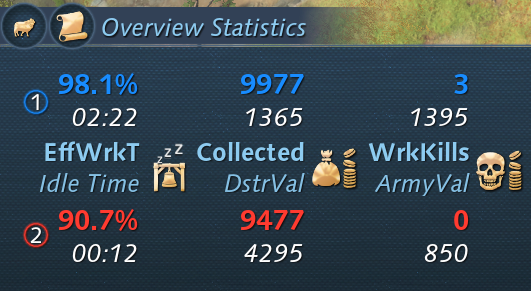
Here we can analyze the position from the very same game with the horsemen under the tower failing to deny. Here we are 12 minutes in to the game and numerous attempts have been made to burn the tower and blue has just lost units non stop. That is reflected in the Destruction Value (DstrVal) of the red player. He has destroyed units worth of 4295 resources. On the flipside, his Effective Worker Time (EffWrkT) is only 90.7% indicating an overall worse economy, but in reality he is only 500 resources behind in Collected Resources.
So when we look at the total resources at each players disposal at 12 minutes into the game:
Japan (Red):
- Resources lost: 1365
- Bank: 9477
- Total resources (field + bank): 8112
Macedonians (Blue):
- Resources lost: 4295
- Bank: 9977
- Total resources (field + bank): 5682
That’s a 2.430 resource difference in favor of the defending red Japan player!
Let’s look at the same situation where I play the Macedonian position:
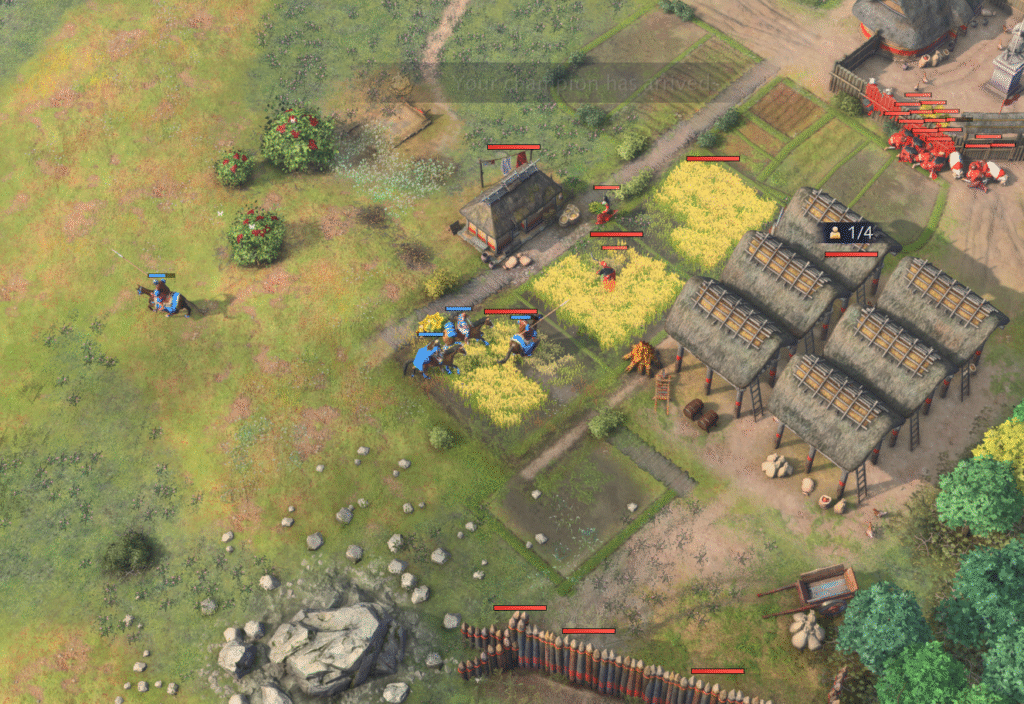
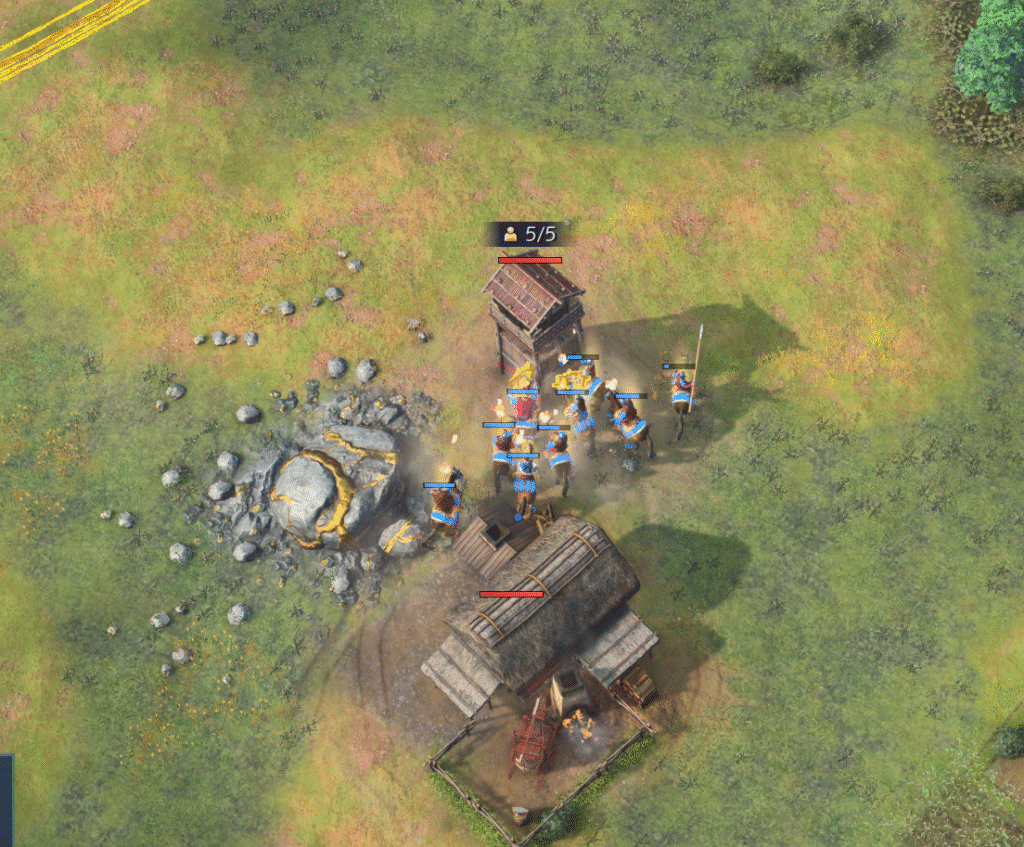
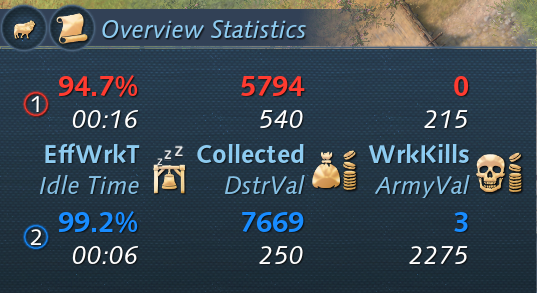
We can analyze the position from my game. I am blue and Japan is red. Here we are 9:30 minutes in to the game.
Japan (Red):
- Resources lost: 250
- Bank: 5794
- Total resources (field + bank): 5544
Macedonians (Blue):
- Resources lost: 250
- Bank: 7669
- Total resources (field + bank): 7129
That’s a 2.125 resource difference in favor of the attacking blue Macedonian player!
Why This Advantage Matters
In the position we analyzed from my game, correct execution leads to more than an 1800 resource advantage. That number is not random. It is almost exactly the cost required to reach Castle Age.
In addition to that economic lead, we also have roughly 2000 resources worth of units already on the field. This creates an important strategic premise that is super important to understand:
If we stop producing units and go directly to Castle Age, the opponent must continue producing units to defend. That means the resources we invest into aging up are effectively matched by their military spending, keeping the overall balance of resources roughly equal on the battlefield.
For Macedonians and for any civilization trying to disrupt a Fast Castle strategy. This timing is critical.
That economic advantage allows the player to transition into the win condition:
- Golden Horn Tower activated
- Crossbows and Riddari entering production
- Map control already established (and not lost again when aging up because enough units on the field to defend!!), maintaining access to resources such as boar and deer
In other words, the strategy was already pointing toward the correct win condition. The student simply did not yet have the mechanical skill and game understanding required to execute it properly and realize the advantage.
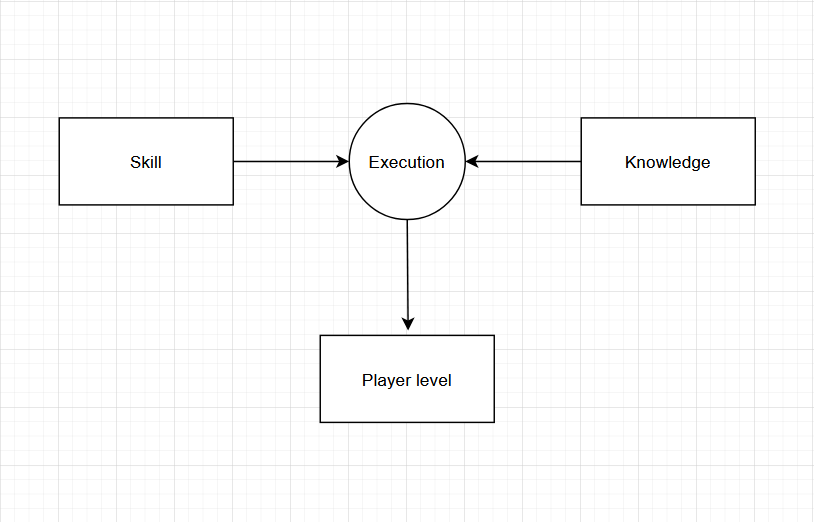
Improvement in strategy games is rarely about learning a completely new idea.
More often, it’s about learning how to execute the ideas you already understand and recognizing the small details that turn a good plan into a winning position.
I hope you found this useful.
2 Responses
Great sneak peak into what coaching will look like with you. Will definetly book a session after Ramadan.
Thank you for your kind comment 🙂